PPP-aware planning
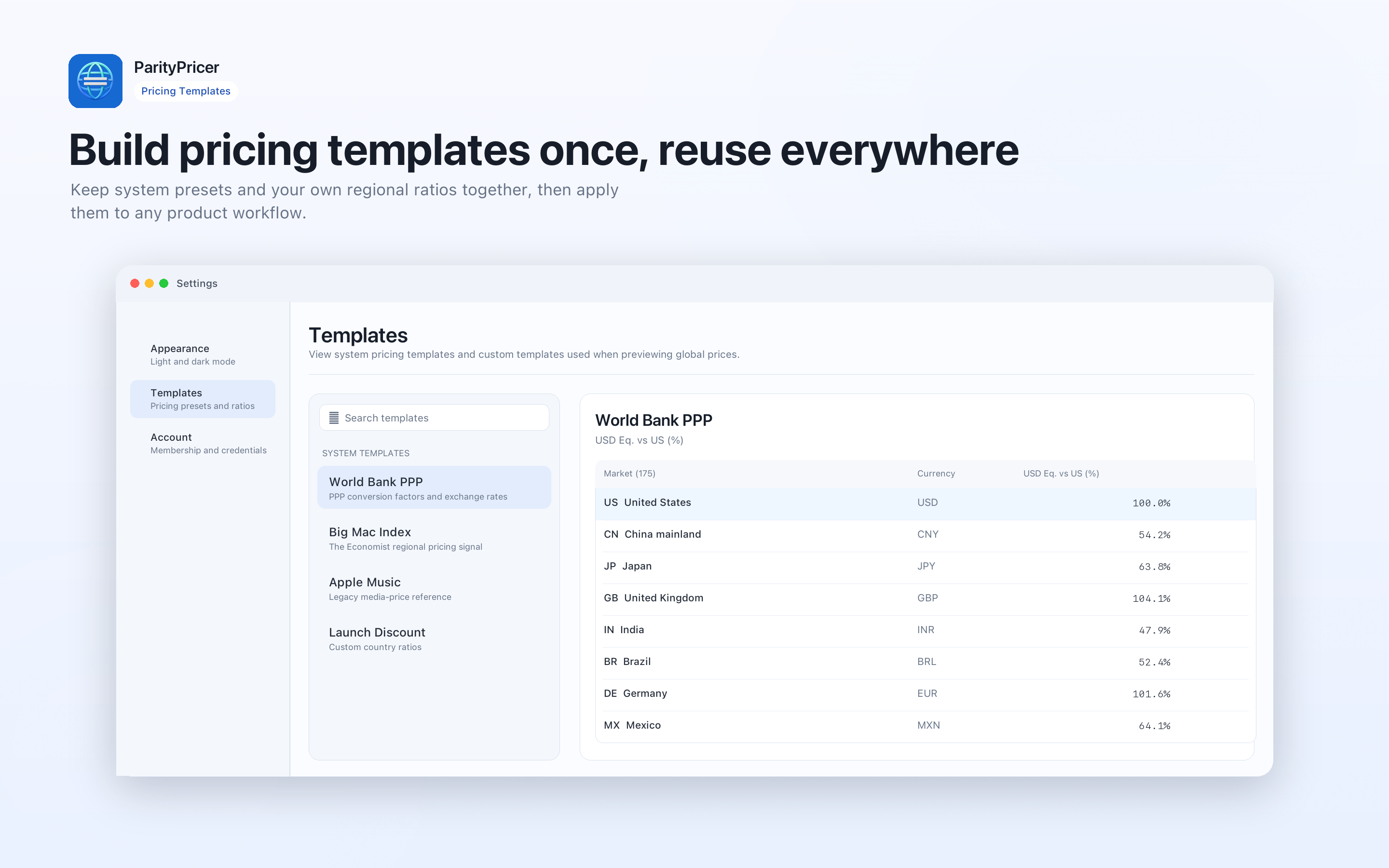
Use purchasing power templates as a starting point for price localization, then adjust ratios to fit your product, audience, and revenue goals.
 ParityPricer
Contact
ParityPricer
Contact
ParityPricer for macOS developers
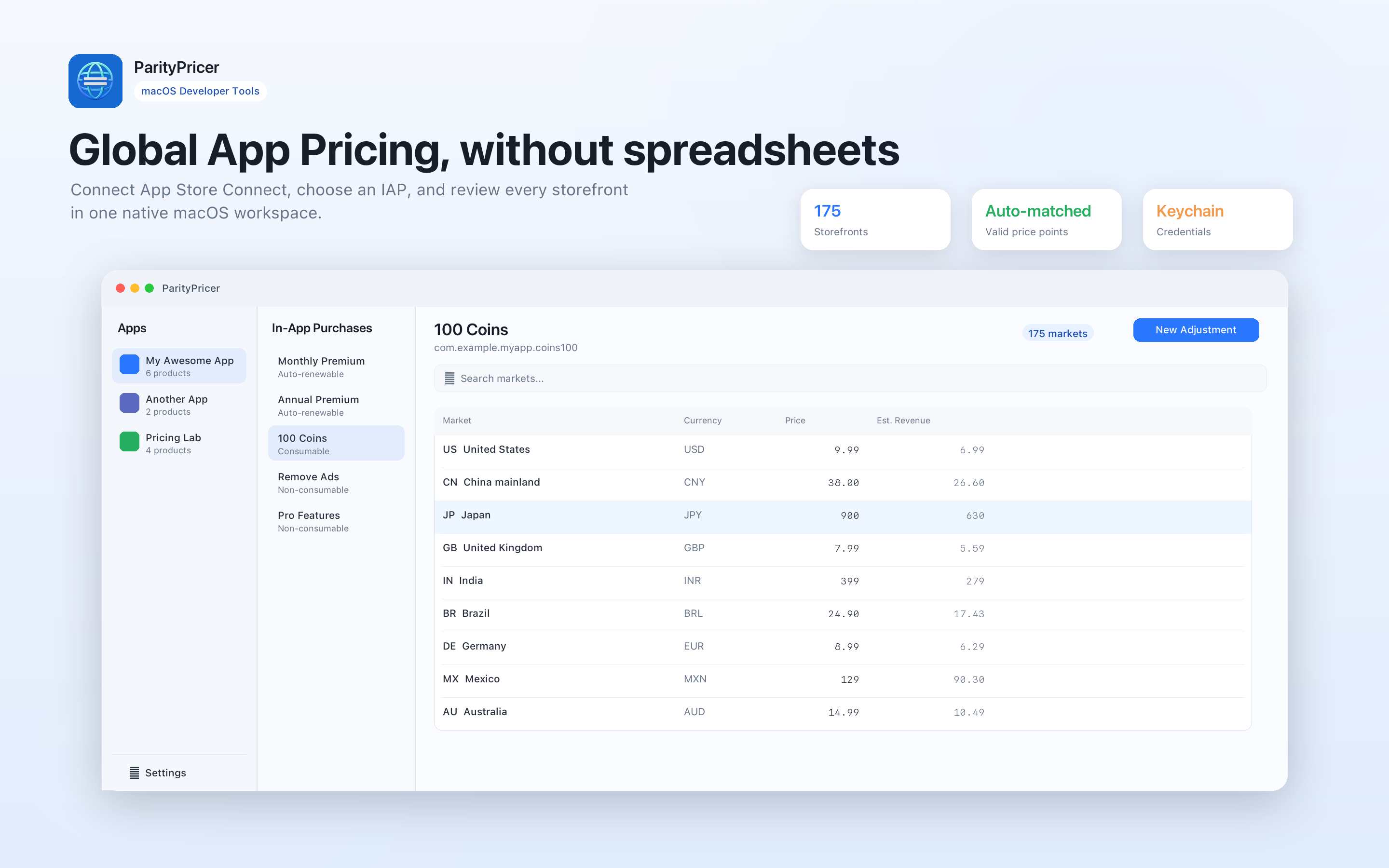
ParityPricer is a native macOS price localization workspace for app developers. Connect App Store Connect, choose an in-app purchase or subscription, and build market-aware prices with PPP data, reusable templates, and valid Apple price points.
Global pricing dashboard
Good price localization starts with the prices you already have. ParityPricer loads your apps, subscriptions, and in-app purchases from App Store Connect so you can review current prices, currencies, and estimated developer revenue before changing anything.
Instead of exporting storefront data into a spreadsheet, you can compare markets in one focused macOS workspace. The dashboard gives localization work a clean starting point: current customer price, storefront currency, product type, and the markets that need attention.
Purchasing power pricing
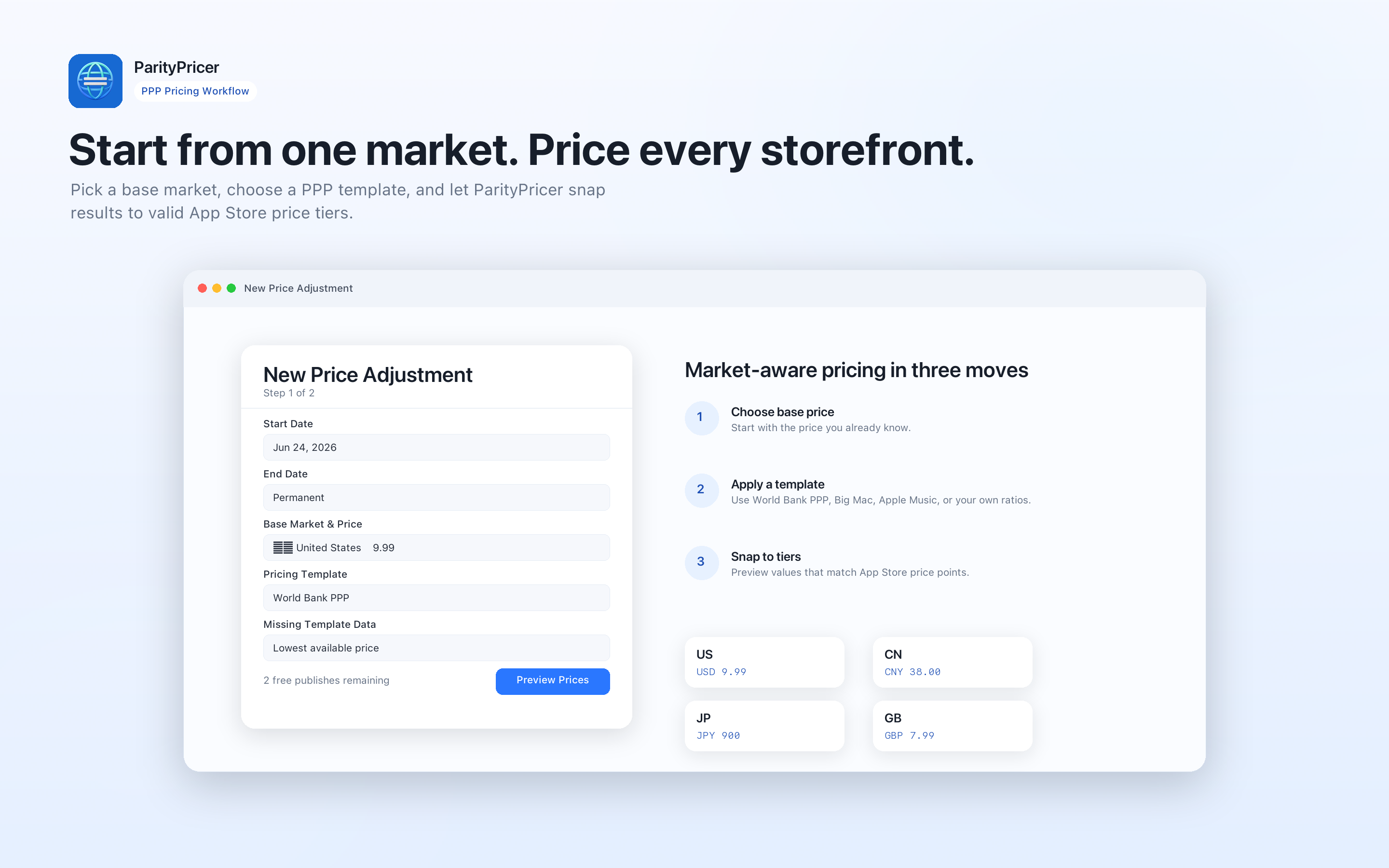
Start with a base market and price, select a template, and let ParityPricer calculate a regional schedule. The app uses purchasing power parity data and pricing indexes to make price localization easier than guessing country by country.
Every calculated value is matched to available App Store price points. That matters because effective price localization is not just currency conversion; it has to respect Apple's regional price ladders, storefront currencies, and the pricing psychology of real customers.
Preview before publishing
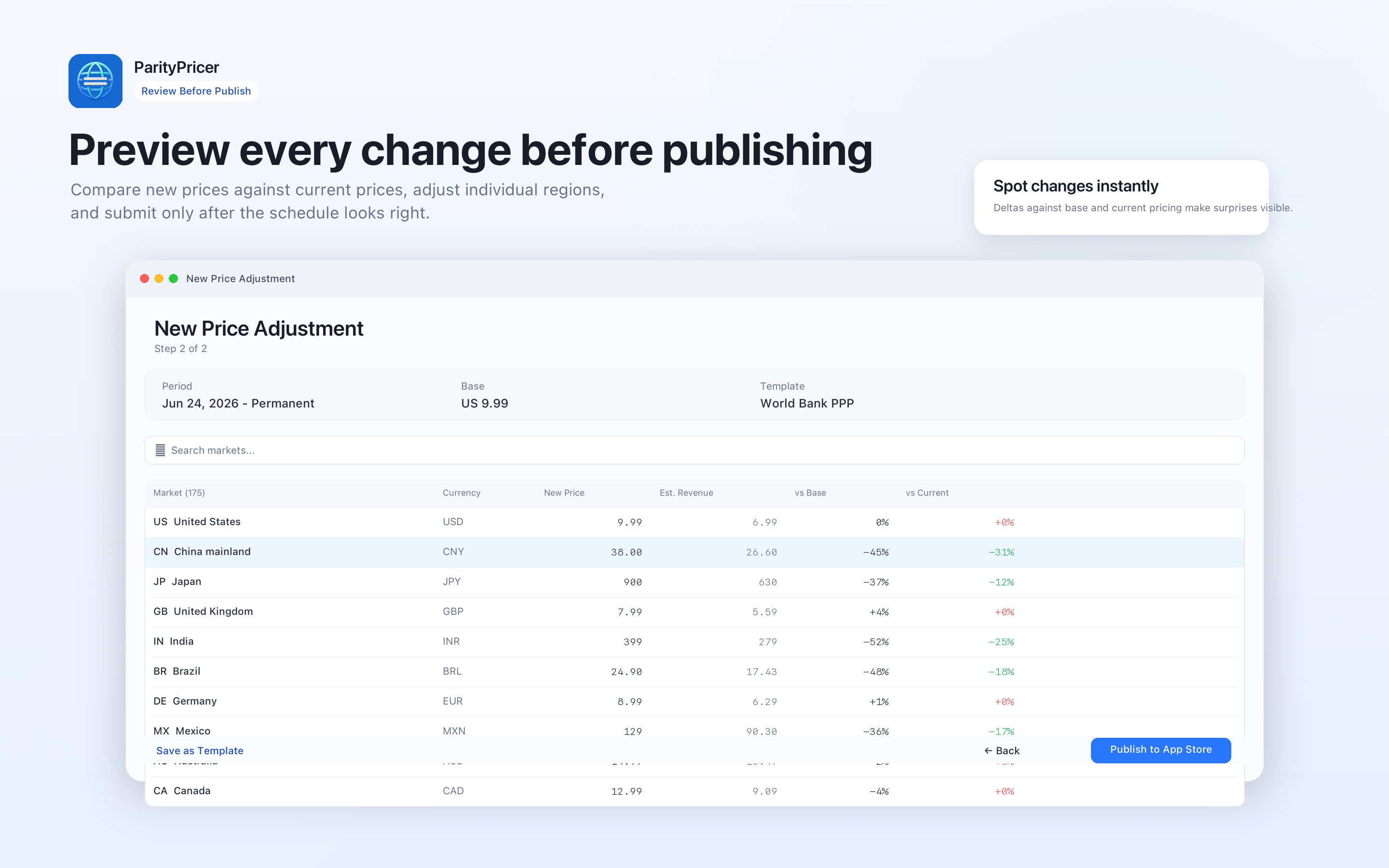
Price localization can affect conversion, revenue, and existing subscribers, so ParityPricer keeps review at the center of the workflow. Compare current and proposed prices market by market, edit individual regions, and publish only after the full schedule looks right.
The preview table shows discounts, increases, manual edits, and estimated developer revenue. When your price localization schedule is ready, ParityPricer can submit permanent or date-based adjustments to App Store Connect.
Private by design
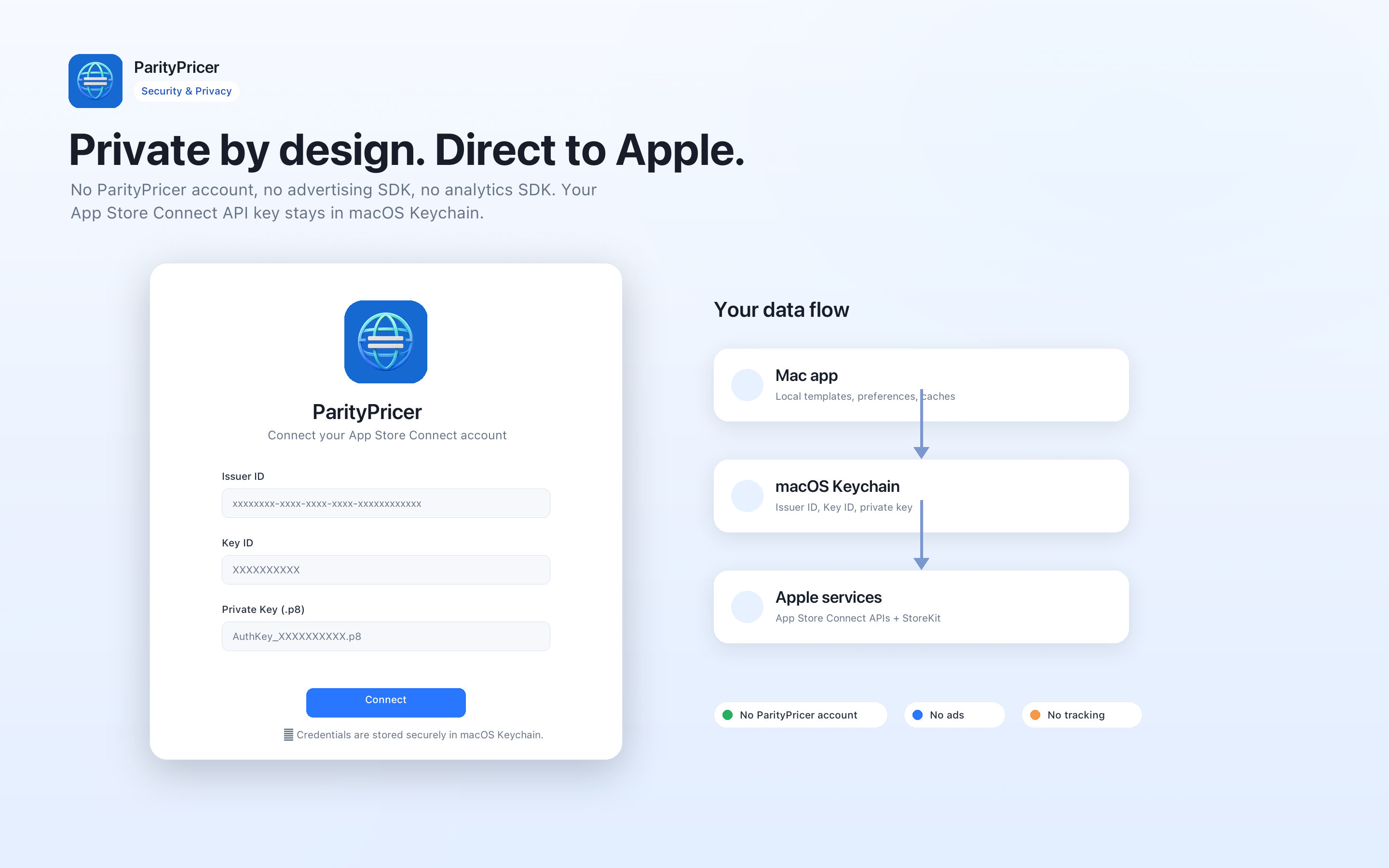
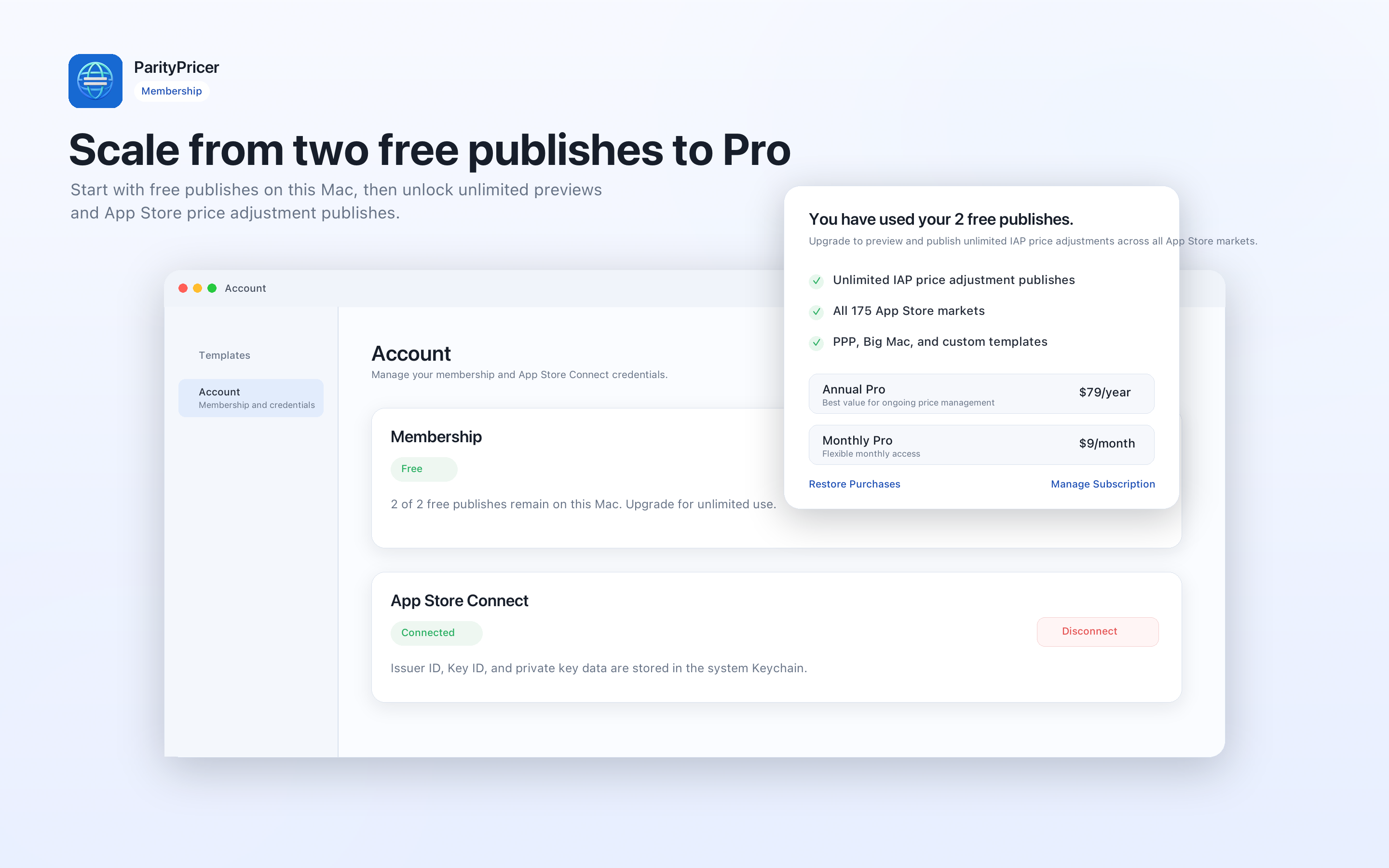
ParityPricer is built for developers who want price localization without handing pricing data or App Store Connect credentials to another backend. Your Issuer ID, Key ID, and private key are stored in the macOS Keychain, and the app connects directly from your Mac to Apple's services.
Custom templates, cached price tiers, and product selections stay local. That makes ParityPricer a practical regional pricing tool for indie developers and small app teams who want control without extra account setup.
App Store pricing strategy
App Store developers often begin with one familiar price, such as a United States subscription price, and let default storefront conversions carry the rest. That approach is convenient, but it rarely reflects local purchasing power, competitor expectations, or the way customers perceive a price in their own currency. Price localization gives teams a more deliberate way to set fair, competitive regional prices while still using the valid price points Apple provides.
ParityPricer focuses on practical App Store price localization. It helps you start from a base market, apply purchasing power parity or another pricing template, then review how each country changes against the base price and current price. This makes price localization easier to explain and safer to execute, because every market has a visible reason behind it instead of a buried spreadsheet formula.
For subscriptions and in-app purchases, price localization is also an operational workflow. You need to know which products are affected, which territories will increase or decrease, which price point each market can use, and whether the final schedule is ready to publish. ParityPricer turns price localization into a repeatable process: load current prices, choose a template, preview changes, edit exceptions, save custom ratios, and publish when you are confident.
The goal is not automatic discounting everywhere. Good price localization balances affordability, revenue, and product positioning. Some markets may need lower PPP-adjusted prices, some may stay close to the base market, and some may deserve a custom strategy based on your app category. ParityPricer gives you the structure to make those decisions without losing sight of the full global schedule.
Built for developer workflows
Use purchasing power templates as a starting point for price localization, then adjust ratios to fit your product, audience, and revenue goals.
Map proposed regional prices to valid App Store price points so your price localization plan can become a publish-ready schedule.
Save a reviewed regional pricing strategy as a custom template and apply it again when you add products, test packages, or revisit subscription pricing.
Workflow
Move through the entire pricing flow without context switching: inspect current prices, compare templates, preview regional results, and publish only when the schedule is clear.
FAQ
Price localization means setting prices by market instead of relying only on exchange-rate conversion. For App Store products, it often combines local purchasing power, valid Apple price points, competitor context, and your own revenue strategy.
Currency conversion translates a base price into another currency. Price localization asks whether that converted price makes sense for local customers, then chooses an App Store price point that better fits the market.
No. You preview the full price localization schedule first, then choose when to publish it to App Store Connect.
Credentials are stored locally in the macOS Keychain and used to sign requests from your Mac.
ParityPricer includes two free publishes. Pro unlocks unlimited previews and publishes for ongoing price localization work.
Visit the support page for setup help, purchase recovery steps, subscription guidance, and a direct developer contact button.
Need help?